We invite you to embark on a meaningful adventure with our brand new collection of Camino and pilgrimage trips that embody centuries of spiritual tradition and opportunities for personal discovery.
Here at Headwater, we believe your focus should be on your personal journey, reflection, and the unique camaraderie found along each path. That's why we handle all the logistics and practicalities; from comfortable accommodation bookings to optional luggage transfers and effortless route guidance.
With us, you can fully immerse yourself in the spiritual essence of your pilgrimage, free from hassle or worry. Let us take care of the planning, so you can walk with purpose and return home enriched.
Besides religious or spiritual motives, people also embark on the pilgrimage for many different and often personal reasons, like adventure, personal challenge, historical interest, reflection, disconnect or to mark a significant event or passing. Regardless of your personal motivations, the pilgrim etiquette is to respect those of others.
Whilst the Camino de Santiago has rich religious history, you do not have to be religious to walk it. It is worth noting that upon reaching the Pilgrim's Office in Santiago de Compostela you will be asked your motivation in order to determine which certificate you receive. For a Compostela, you must claim it was 'religious', 'spiritual' or in an 'attitude of search'. Those whose motivations are different than these can still receive an official Certificate of Distance.
One of the staples along the Camino is the Pilgrim's Menu (Menu del Peregrino), a long-standing tradition, it is a fixed price evening meal offered by restaurants and bars. The Pilgrim's Menu is designed to provide substantial sustenance at an affordable price for pilgrims. It typically consists of 3-courses: a starter of a soup or pasta, a meat or fish main and a simple fruit, yogurt or desert, and includes glass of the local wine or a small beer to help wash it down. It is simple yet hearty fare, often served in a communal dining space allowing Pilgrims to come together to share stories after a days walking. There is nothing quite like dining together to help build camaraderie along the Camino, and it is often around the shared table where strangers become life-long friends.
The pilgrimage is about the journey, and it is one that takes you through some beautiful locations and also some more remote ones. As such, we have selected a range of friendly, well run yet simple accommodations for our routes. What they lack in luxuries, they more than make up for in the warmth of their welcome. As you will appreciate, this is a different type of trip to our usual Headwater holidays, and as such, please do not expect the same standard of accommodation. However, we do offer private rooms and private bathrooms so your well-deserved rest is assured at the end of a days walk, when this is not possible we will inform you. We believe the Pilgrimage is about your personal journey, and not about feeling you have to sleep in shared dorms with bunk beds of the Albergue. The accommodation we use are often small and it depends how far in advance you book on their availability, as such we do not list them on our website; the names of the accommodation you will be staying in is shared with you nearer to your departure date.
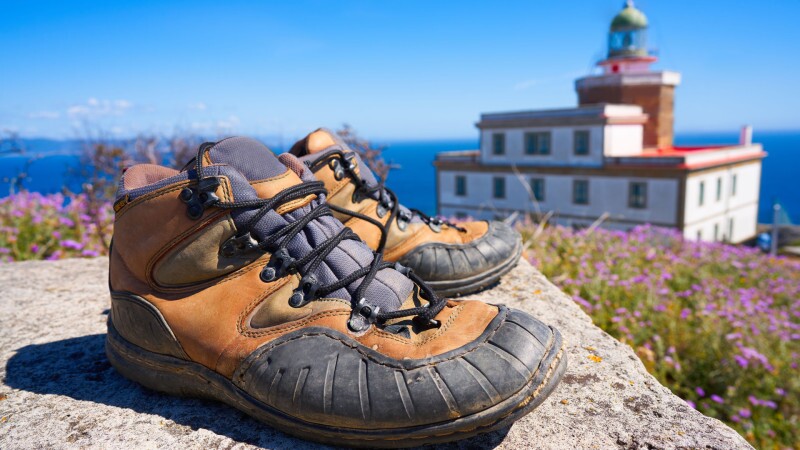
When using luggage transfer on the Camino, you can travel light and focus on essentials for each day's walk. For walking the Camino de Santiago pack comfortable walking clothes suitable for changing weather - think layers for warmth, a waterproof jacket, and a hat for sun or rain. Good walking boots are vital, making sure they are well walked in. Never take new boots! And don't forget spare socks to keep feet dry in case you are caught in a famous Galician shower. For comfort, you can also consider also taking walking poles with you.Headwater recommends carrying a small daypack which can also carry water, snacks (or even lunch on stages where services are limited), sunscreen, and your passport and any personal items, a lightweight first aid kit with any medications you require, your mobile phone, a charger (with adapter if needed), and your guidebook or map. Finally, don't forget to take your Pilgrim's Passport with you and be sure to get the stamp of where you stopped overnight. If you have transfers booked, simply leave your main luggage labelled at your accommodation each morning for the transfer; only carry what you need for the day. We strongly recommend booking a luggage transfer as it lets you enjoy the journey without a heavy load, and to focus on the experience itself.
There is no luggage transfer service offered on your pilgirmages in Japan, we suggest instead to use of the local luggage transfer service called Takkyubin. With Takkyubin, you can walk with ease and focus on the trail rather than on carrying a heavy pack.For walking the Kumano Kodo, pack comfortable walking clothing suitable for the region's variable weather. Layers are essential for warmth, and a lightweight waterproof jacket is invaluable during periods of rain or mist. A sunhat or cap is also useful, as some sections of the trail are exposed. Good quality walking boots are vital, make sure they are well broken in before you travel. Never take new boots! Carry spare socks so you can keep your feet dry should you encounter wet weather on the mountain paths. Many walkers also appreciate having walking poles, especially on the steeper, stone lined sections of the route.We recommend carrying a daypack with space for water, snacks (or a packed lunch on days where facilities are limited), sunscreen, personal items, your passport, and a lightweight first aid kit including any medication you may need. Don't forget your mobile phone, charger (and adapter if required), along with your route notes or map, as well as clothing for the days in which you will not have your luggage with you if you wish to use the Takkyubin service.If you choose to use Takkyubin, simply send your main luggage ahead to your accommodation mid trail as indicated in your documentaiton and carry only what you need for a few days ahead. Travelling with Takkyubin allows you to enjoy the Kumano Kodo's ancient forest paths and peaceful atmosphere without the burden of a heavy rucksack - letting you fully immerse yourself in the experience.
We can easily enhance your Camino to include luggage transfers. Our Tour Only price does not include them as this is your Pilgrimage and we believe you should be able to decide if you want them or not. Camino luggage Transfers are a fantastic help, and we highly recommend them. They leave you free to focus on the journey, carrying only that days provisions and equipment. You simply leave your luggage clearly labelled at the reception of your accommodation in the morning before you set off and it will be collected, and delivered safe and sound to your next abode. The only burden you should think about carrying is the one up to the Cruz de Ferro.
Our pilgrimages in Japan do not include daily luggage transfer. For most clients on our self-guided pilgrimages, the best way to manage their main luggage is to send it ahead using the excellent and reliable Takkyubin courier service. Takkyubin is the brand name of the best-known provider. These services are secure, efficient, and economical, typically costing between JPY 2,500 and JPY 3,000 per bag per transfer. The forwarded luggage does not re-join you on the pilgrimage each night; instead, it is ready for you at the accommodation where you will stay a night or two later. we recommend to carry overnight essentials in your daypack for the nights in between.Takkyubin is also ideal for those who prefer to walk with only a daypack throughout the trail, without access to their main luggage. They can simply send their main luggage from the accommodation where they stay before the trail to the one where they stay afterwards.Travelling light on the trails is simple and straighforward. All inns provide cotton yukata gowns and slippers to wear after arrival for dining, relaxing in your room, and sleeping. They also provide small towels, soap, shampoo, and hairdryers. You do not need a complete change of clothing for the evening, so it is entirely possible to manage with just a medium daypack for overnight essentials. Takkyubin may be a new experience for pilgrims who have walked self-guided routes elsewhere in the world, but it works exceptionally well in Japan.
No, you do not have to walk the whole Camino in one go. In order to qualify for the Compostela you must walk at least 100km to Santiago de Compostela. If you wish to break up the stages and do them over a period of time, this is completely doable. Simply make sure to get your passport stamped at the end of the stage with the date, and when you return, ensure your passport is stamped and dated again in your starting location when you come to set off for the next stage.
The Cruz de Ferro is a tall, very tall iron cross which sits atop of the highest peak on the Camino Frances between Leon and Sarria, where Pilgrims traditionally leave a stone which they have carried. The stone represent a personal burden one carries, and is left at the foot of the iron cross, traditionally with a prayer or reflection. The traditional Pilgrim's prayer at the Cruz de Ferro is: 'Lord, may this stone, a symbol of my efforts on the pilgrimage that I lay at the foot of the cross, weigh the balance in favour of my good deeds some day when the deeds of my life are judged. Let it be so.'
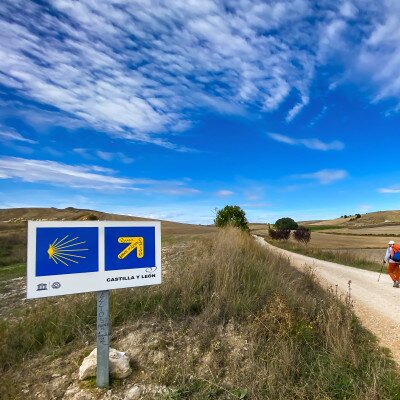
Before the Pilgrim's Passport, the scallop shell (or vieira) was the traditional symbol of completing the Camino de Santiago. In Galicia, being a coastal region they were in abundance in Medieval times, especially near Finisterre, where they were collected as a sign of proof of completing their journey. They had a practical purpose too, as they were a light weight bowl, handy for scooping drinking water from streams or collecting charitable donations of food along the journey. Symbolically, some people believe that the converging lines of the Scallop shell to its centre represent the various Camino routes leading to Santiago de Compostela. They are also connected with a miracle of St. James where a knight and horse were saved from the sea and returned to shore covered in the shells. Today the shell acts as a way-marker along the various Camino routes to help guide pilgrims, and is worn by pilgrims as a badge of honour and an invitation for camaraderie.
The Pilgrim's Passport is an essential document for anyone walking the Camino de Santiago, and serves three official purposes: access, identity, proof of the journey and receipt for the Compostela. It can provide you access to discounts on meals, such as the Pilgrims Menu and reduced entrance fees to certain attractions. Through the collection of stamps it builds to form a document of proof of your journey along the Camino. For the Camino de Santiago it is required to be presented at the Pilgrim's Office before receiving the Compostela. More than its functions, it also serves as an aide memoire of the journey taken, a personal record of the path you trod to reach Santiago de Compostela. Read more about the personal meaning behind the Pilgrim's passport here: [link to blog]
Importantly, you must first pre-register online at oficinadelperegrino.com/en/ and complete the required fields. You will receive a code to use later, once you reach Santiago. On the form you can also tick to receive a Certificate of Distance and there is a nominal charge for this service. To obtain your Compostela certificate, you must walk at least 100km (or cycle at least 200km) along the Camino to Santiago de Compostela. Enroute you must ensure your Pilgrim's Passport is stamped at each stage and dated, as it serves as proof of your journey and it is required for the certificate. If you are breaking the route into separate stages, be sure to get your stamp dated at the end of a stage and get the stamp again where and when you restart the Camino. On arrival to Santiago de Compostela, when you are ready you will need to visit the Pilgrim's Office in Santiago. The Pilgrim's office is located at Rua das Carretas, 33 in Santiago, just a few metres from central Praza do Obradoiro. When you are facing the Cathedral de Sanitago, simply turn to your left and follow the signs for the 'Oficina do Peregrino'. When you arrive at the 'Oficina do Peregrino', use your pre-registration code to get a digital ticket. This will let you know where you are in the queue. You don't have to wait at the office, however it is important you return approximately 40-50 numbers ahead of your place in the queue to avoid missing your turn. If you do miss your turn, you will have to start the whole process again. When it is your turn, go to your assigned desk and present your 16-page Pilgrim's Credencial (Passport) to receive your Compostela Certificate. You will be asked about your motivation for the pilgrimage, either religious, spiritual, or in an 'attitude of search' - in order to confirm which certificate you receive. For the Compostela, your motivation must fit one of these three categories. If you are walking for another or non-religious reason, you can still receive the official Certificate of Distance if selected at registration. Whilst being open 10:00-18:00 every day, except Christmas day and New Years Day, it is worth noting that at really busy times, or for late arrivals to the city, the Pilgrim's Office does not guarantee collection of the Compostela on the same day. When you receive your Compostela or Certificate of Distance, you can purchase a protective tube to keep the contents safe on your journey home to proudly share your achievement with friends and loved ones.
Holy Year, or Xacobeo, occurs when St. James's Day (25th July) falls on a Sunday, which follows a 6-5-6-11 year cycle. During this time, the Holy Door of Santiago Cathedral is opened, granting pilgrims the opportunity to receive Plenary Indulgence (full remission of time in purgatory due to sin, once the guilt of the sin has been forgiven). The last Holy Year was in 2021/2022, and the next will be in 2027, followed by 2032 and 2038. As this is the highest spiritual grace a pilgrim can earn, pilgrims can expect the Camino to be even more popular and it is strongly recommended to book early, even on the quieter Caminos, to secure accommodation along its routes.
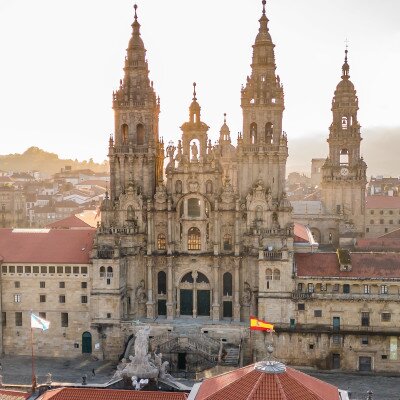
Yes, absolutely. Beyond the Praza do Obradoiro, home to the famous Catedral de Santiago de Compostela and the revered finish point for the Camino de Santiago, the city itself has a host of other historical, cultural and edible delights to share. The Cathedral is home to the very tomb of St. James, and also boasts a stunning museum of its vast collection of arts, plus there is a rooftop guided tour of the century old building offering a bird's eye view of the city. Turning 180 degrees from the Cathedral's Gothic facade you come face to face with the imposing one of the Fonseca Palace with its Renaissance courtyard, today a treasured university library. Just behind the Cathedral is the Museum of Santiago and Pilgrimages where you can learn more about this fascinating historical and spiritual network of routes. After this, if you are feeling peckish, you are thankfully never to far from somewhere tempting you to a tarta de Santiago, the city's famed almond cake bearing the cross of St. James. Assuming you still have spring in your step, Santiago's UNESCO-listed Old Town is a dense, walkable treasure trove of narrow cobblestoned streets, small shops and cafes. For true local flavour dive into the Rua do Franco. This vibrant street is tapas heaven, famous for its free bar snacks and classic Galician fare like fresh pulpo. For a unique cultural snapshot, visit the Mercado de Abastos in the morning to see beneath the bonnet of local life and the fresh seafood stalls (closed on Sundays). If you are seeking out art, the Museum of Galician People and the modern CGAC contemporary art museum are great places to head, both offering very different perspectives. For views of the city and Cathedral take a wander through Alameda Park to the mirador, or equally seek out a rooftop bar for a final, intimate farewell drink with the spires. If you are still keen to walk, the Camino Finsterre is a unique 'epilogue' route, as it is the only one that travels away from Santiago, towards the Atlantic Ocean and the historic 'End of the World.'
The Kumano Kodo and Spain's Camino de Santiago are the two main pilgrimage routes around the world that have been designated as UNESCO World Heritage Sites.
This shared distinction has led to an official partnership and a symbolic award: pilgrims who successfully walk portions of both the Kumano Kodo and the Camino de Santiago can apply for a special Dual Pilgrim certificate, celebrating the two great paths of faith and nature.
The Camino Frances ("The French Way") is the classic (and most popular) pilgrimage journey: from Pyrenees mountains, across the arid Meseta, over the Cruz de Ferro, into the green hills of Galicia.
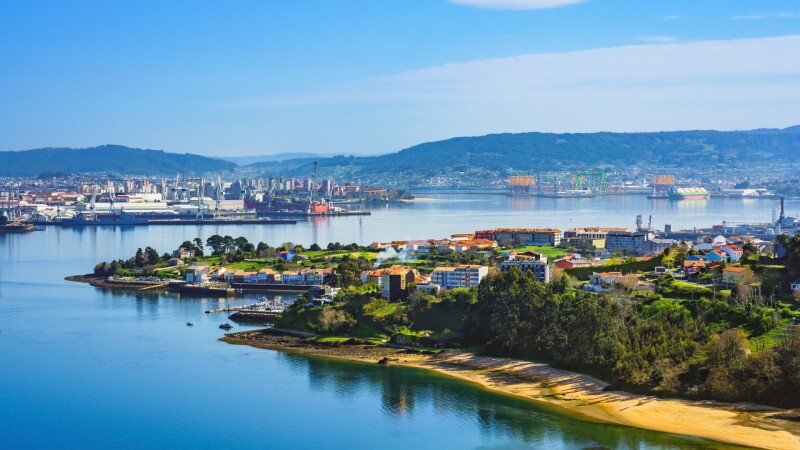
The Camino Ingles ("The English Way") is a short, coastal route from Ferrol, quickly transitioning to lush, rolling Galician countryside and medieval towns, ending in Santiago.
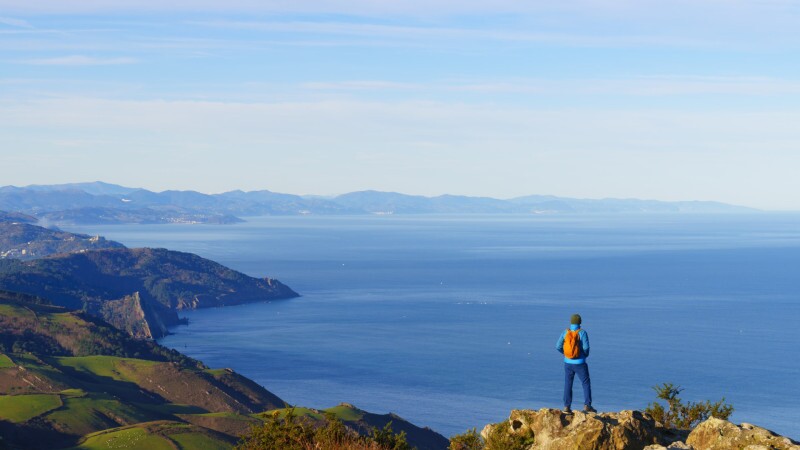
The Camino del Norte ("Northern Way") is renowned for its spectacular, rugged coastal scenery, crossing four distinct regions.
The Camino Primitivo ("Original Way") is the oldest and most physically challenging route, renowned for its isolation and breathtaking scenery.
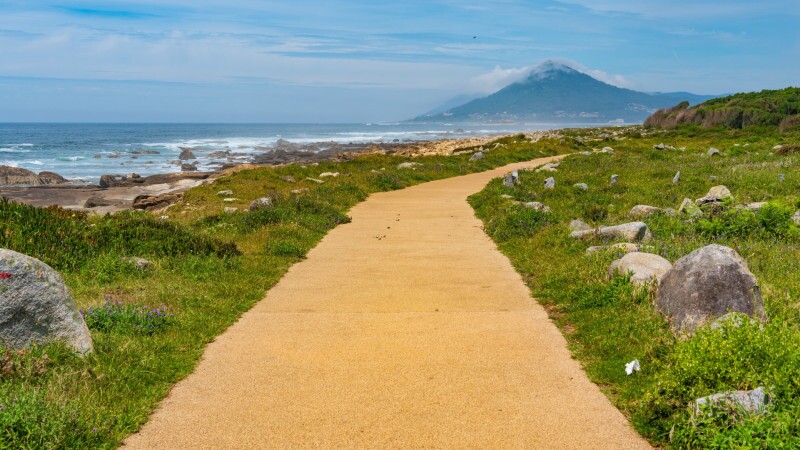
The Camino Portugues Coastal Way offers a spectacular mix of rugged Atlantic beauty and charming seaside towns. It's a fantastic alternative to the Central route, known for its extensive coastal walking.
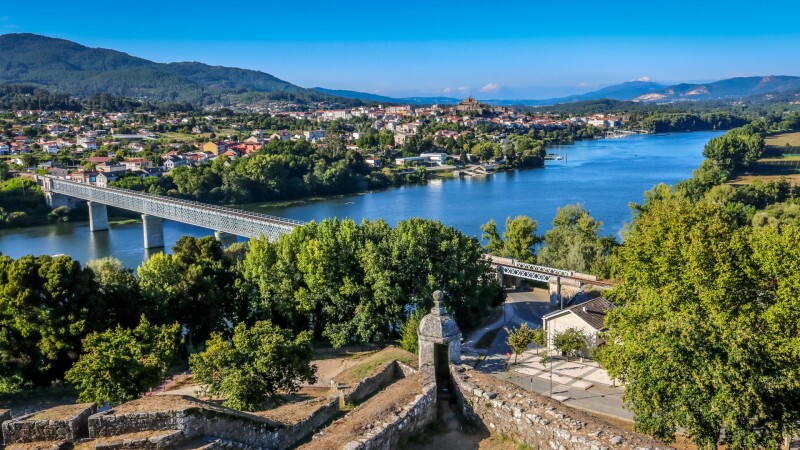
The Camino Portugues Central Way is the more traditional route, rich in historical towns and inland scenery.
The Camino Finisterre is a unique "epilogue" route, as it is the only one that travels away from Santiago, towards the Atlantic Ocean and the historic "End of the World."
The Le Puy Way (or Via Podiensis) is France's most popular Camino - yet still quiet by Camino levels, is renowned for its dramatic scenery and medieval heritage.
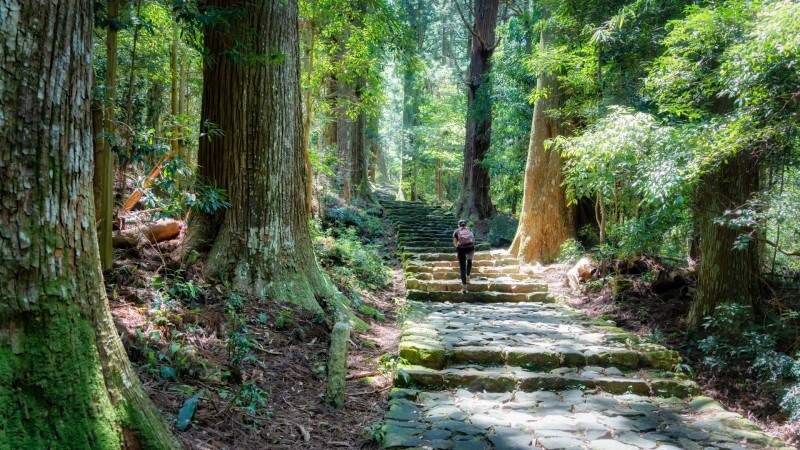
Japan's Kumano Kodo is a sacred network of trails in Japan, distinct for its blend of Shinto and Buddhist spirituality nestled in ancient forests.
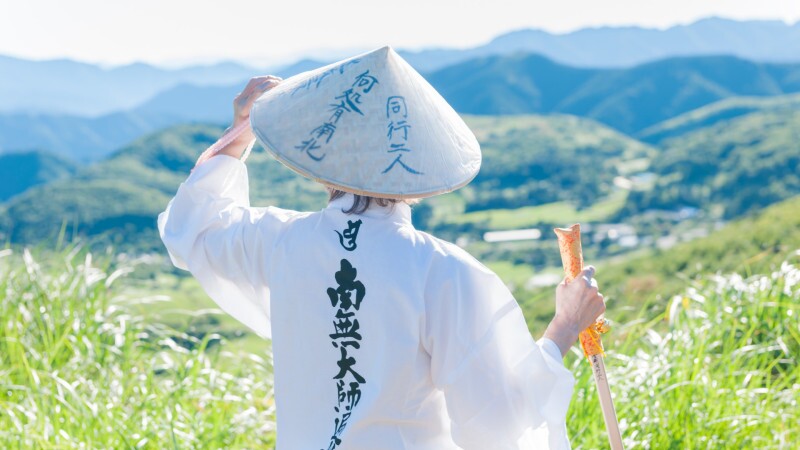
Japan's Shikoku 88 Temple Pilgrimage is a route following in the footsteps of the revered monk Kukai (Kobo Daishi).
The Way of Saint James has led Pilgrims to Santiago de Compostela for over 1000 years. So to walk its routes, is to walk in the footsteps of those Pilgrims.
James, one of Jesus disciples is said to have travelled to northern Spain after the death and resurrection, to spread the word of Christianity. He did not fare too well winning few followers, but fared less well when he returned to the Holy Land and was beheaded by King Herod Aggrippa. His disciples smuggled him aboard an unmanned boat which took him to Padrón, from where he was taken to lay in rest in what is now Santiago de Compostela. He lay forgotten until in 813AD a hermit Pelayo had a vision of a star above where Saint James lay. Pelayo had made the significant discovery of the bones of Apostle James, so said the local bishop Teodomir.
The name Santiago de Compostela comes from the Latin pronunciation of Saint James which morphed over time into Santiago, and Compostela deriving from the Latin campus stellae meaning field of stars, or composita tella meaning burial mound.
It wasn't until the 12th Century that the Camino de Santiago grew in importance to the Christian world. This was largely down to the vision of Bishop Diego Gelmirez, who undertook a dramatic new design of the cathedral and other improvements throughout the city, and promoted the Camino across Europe, including managing to get the Pope Callixtus II to proclaim the city and archbishopric which elevated its standing in the Catholic world, and to endorse the first ever guidebook of the Camino, the Codex Calixtinus. This contained stories of Saint James' miracles, the history of the route and more practical advice for Pilgrims. The result of which was thousands of Pilgrims visiting during the Middle Ages. However, the Reformation in the 16th Century saw numbers decline as Protestantism challenged the authority of the Roman Catholic Church, and almost stop altogether during scientific revolution of The Enlightenment. The Camino de Santiago lay dormant until its resurgence in the late 20th Century. Now more than 450,000 pilgrims make the journey every year and receive their Compostela, making it the most popular walking pilgrimage in the world.