Self-guided walking

7 nights,
single centre

Level: 1
Leisurely

Flights
available

18.0Kg CO2e

Headwater
Navigation App
There is a sense of peace and tranquillity on beautiful Menorca, a UNESCO Biosphere Reserve and home to the greatest concentration of prehistoric sites anywhere in Western Europe. More sparsely populated than any other Balearic island and only a fifth of the size of Mallorca, it has more beaches than Mallorca and Ibiza combined! The island has been claimed in turn by many armies, all desperate to control the capital Mahon, set on the Mediterranean's most perfect natural harbour.
This self-guided walking holiday combines a wonderfully varied itinerary that takes in many of these ancient sites, exploring stunning coastal scenery dotted with narrow rocky inlets and magnificent beaches. Castles, fortresses and watchtowers line the coast, linked by the Cami de Cavalls, the paths originally used by soldiers. These now allow walkers to explore the coastline with its idyllic sandy beaches, hidden coves and bays with dazzling aquamarine seas. With the freedom a hire car affords, you really can explore this entire beautiful island at your own pace.

TERRAIN
Walks on this holiday are mostly coastal trails. Many surfaces are loose stone with some sandy paths. Inland sections are on easy country tracks and farm trails. Walking boots are recommended.
On arrival in Mahon, pick up your hire car and drive (1 hour) to the hotel in time for a relaxing swim before dinner.
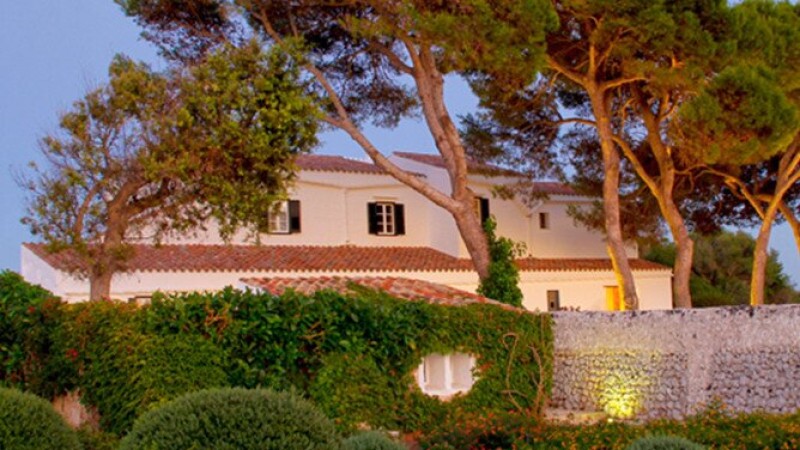
You stay at Binigaus Vell.
 Shops
Shops Mastercard
 Visa
Visa Pool
Pool Hairdryer
 WiFi
WiFi TV
TV Minibar
 Aircon
 Safe
Safe
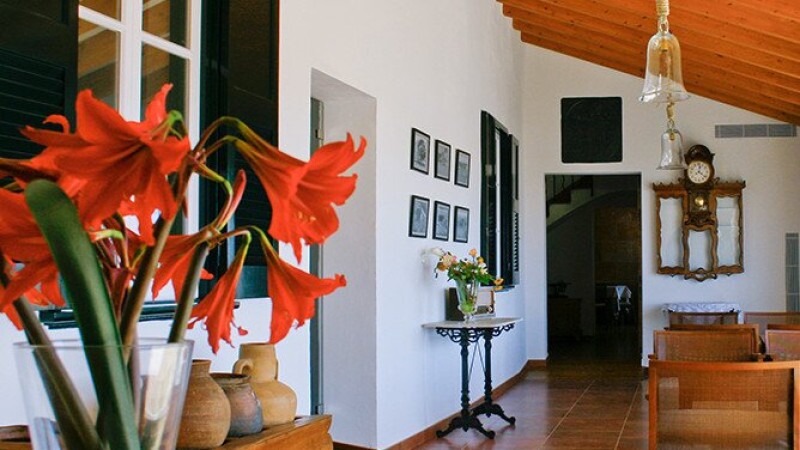
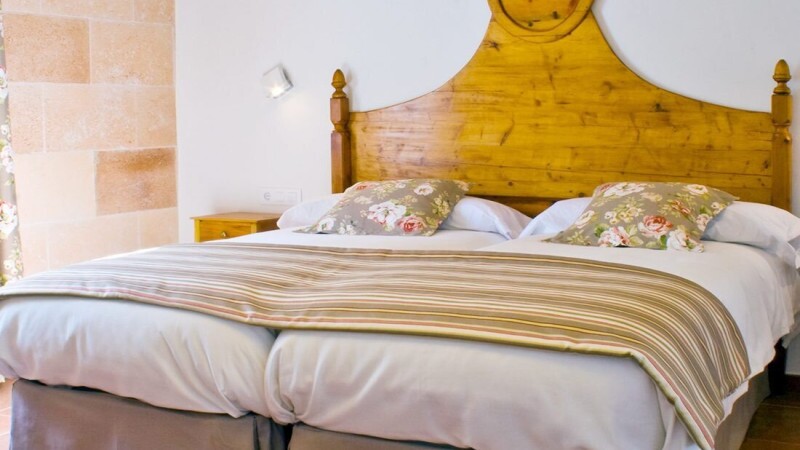
This restored country house is a 4-star rural hotel, with a seawater pool and free Wi-Fi. Hotel Binigaus Vell is less than 1.9 miles from Binigaus and Sant Tomas Beach. Surrounded by the Menorcan countryside, Hotel Rural Binigaus Vell has its own stables and offers horse riding on site. There is also a typical restaurant, a garden area and a terrace.
Starting in Santa Galdana and winding along coastal paths dotted with pink orchids and gladioli, this walk takes you over three breezy headlands which dip down to pine fringed beaches before arriving at Cala Turqueta, named as such for its shimmering turquoise water. after a picnic in the shade, return to Santa Galdana to end your walk, before getting a taxi back to collect the car.

The dramatic red and purple rocks of the north stand in real contrast to the bays of the south. From a poppy-strewn headland, the Cami de Cavalls lead along a series of beautiful lonely windswept beaches, before a farm track loops back inland through a host of golden asphodels. on the way back, perhaps stop for a drink at Fornells, a chic village with a pretty port, or drive up Monte Toro (357m) for panoramic views of the entire island!

You can taste the sea salt in the air along this stunning coastal path leading to Torre d'Alcaufar, a restored lookout tower. Perhaps enjoy lunch in Alcaufar, before the Cami de Cavalls leads you past fig trees and fortified farmhouses to Fort Malborough set on the tiny harbour of Sant Esteve. Continue on to a local cafe where they will call you a taxi to return to your car.

The cities at either end of Menorca make fascinating days out, and we provide walking notes for both. Mahon's natural harbour is big enough to shelter an entire fleet of ships and forms the backdrop to some impressive Georgian English architecture. In Ciutadella, the plazas, fountains, palm trees, cobbled alleys and Spanish Palaces are steeped in history. Perhaps treat yourself to a seafood lunch looking out over the attractive harbour.
From the golden sand beaches of Sant Tomas on the south coast, a path lined with white cistus and yellow crown daisies leads between lush terraces to the Cueva des Coloms, a gigantic limestone cave, perfect for a cooling picnic in the shade. From the top of the valley a pine scented track leads you back down to the beach for a swim. On returning to the hotel, relax on your terrace with a cold drink and take in the beautiful sunset.

Today's route takes you back down to the south coast and across low creamy rocks covered in bright yellow seapoppy, wild thyme and pink cistus. Lunch by the sea in Son Xoriguer, there are masses of swimming options along the way, then head back via the enchanting former capital, Ciutadella.

Price excludes estimated local taxes/fees of 46 EUR.
These prices are per person, based on two people sharing. Single supplement from £725.

 We can book your flights, protected by ATOL and ABTA. Please ask at time of enquiry.
Car hire is subject to at least 2 people per booking.
If you choose a flight inclusive package with us, you will fly into Mahon airport.
We hold an ATOL License and are fully ABTA bonded, so you can book your flights with us in confidence. We can book most airlines and will advise you of your most convenient airport and flight options.
Flight prices fluctuate significantly and can change rapidly. At Headwater, we offer competitively priced flights with built-in flight protection for your peace of mind. For more details, please click here.
Self-guided walking
7 nights,
single centre
Level: 1
Leisurely
Flights
available
18.0Kg CO2e
Headwater
Navigation App