Landscapes of the Luberon (press reviews)

France: A walk in Luberon

You don't need a year to fall in love with this idyllic corner of France. Louise Roddon takes to the hills on a rural hiking break.

Published: 06/04/2010
Sunday Express

Packing for a walking holiday in France should be straightforward. Hiking boots, T-shirts, shorts, a floppy hat and sun cream usually suffice. However, being slightly paranoid, I went that bit further and stashed away an arsenal of gadgets designed, I'm ashamed to admit, to keep Mother Nature at bay.

Here was my dog zapper, an ultrasonic device to deter those vocal hounds that guard country villas. Next, a walking stick, to help with the climbs in the 640 square mile Luberon Regional Nature Park but hopefully a snake scarer too.

Lastly, mosquito repellent and wasp-sting cream. Yes, you've guessed it - I'm a city girl at heart.

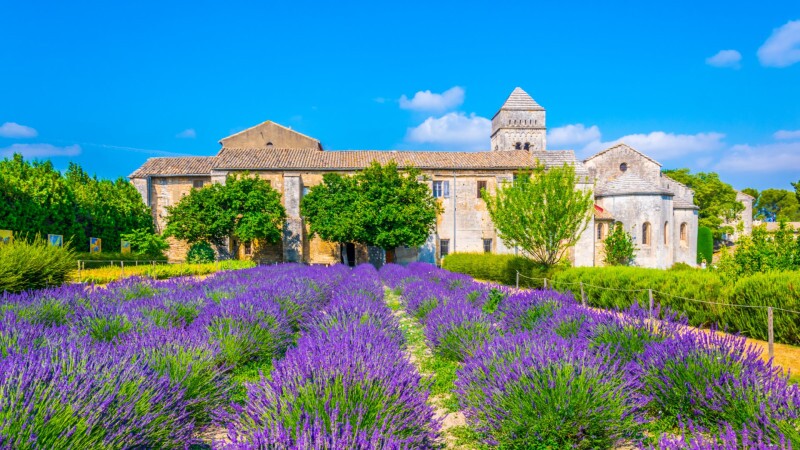
What I hadn't appreciated, was just how charmed I would be by this extraordinarily varied part of Provence. Walking allows insights that you may miss based in a hotel or sealed in a hire car. Chats with farmers, a friendly exchange with a baker in a backwater hamlet perhaps and, of course, there's the scenery, a gradual unveiling of lavender-filled valleys giving way to vineyards and ancient villages perched atop ochre-striated hills.

My itinerary was billed as 'easy', a westbound self-guided route through the department of Vaucluse, the city of Avignon's hinterland which author Peter Mayle so vividly evoked in A Year In Provence. I'd be hiking from one country hotel to the next, resting primarily in villages neighbouring the tiny medieval hamlet of Ménerbes where Mayle lived.

Each daily walk was to be different in texture and length, building in miles as the week progressed, with my luggage transported by our tour rep.

I kicked off with a seven-mile forest hike where gaps in the pines revealed views of distant turreted chateaux. I would often hear cuckoos and once saw a vulture.

Sweet-smelling gorse and pine needles added a fragrant accompaniment and butterflies of every hue fluttered in front of me.

In the hill-hugging village of St-Saturnin-les-Apt, I encountered sandstone houses and quiet squares, one of which housed the Hotel Le Saint Hubert, with its bar full of pastis-quaffing locals and bedrooms like Van Gogh paintings.

At dinner I agreed with two fellow hiking ladies from Manchester that this was the loveliest hotel, not least for its panoramic terrace where I savoured a homely meal of goat's cheese salad and coq au vin while taking in a scene of darting swifts and dusk-darkening valleys.

Keeping my own pace, I descended overgrown pathways towards Roussillon. This is one of France's 'Beautiful Villages' (152 were designated in 1982 in a rural tourism drive). In parts it has suffered the 'Mayle Effect', its squiggly lanes overrun with tourist shops and tea salons.

Gordes too, though stunning, felt tourist-heavy but my base on the fourth day was a miniature perched hamlet devoid of crowds: Joucas is determinedly local with life revolving around the friendly bar at our hotel, the Hostellerie des Commandeurs. Rooms are bright with Provençal-style furnishings and an unassuming rustic feel.

My stay culminated in an 11-mile walk from the Cistercian abbey Notre-Dame de Sénanque.

I climbed high into the sprawling Vallon de la Grande Combe with the bald Mount Ventoux (of Tour de France notoriety) in the distance before descending to cherry orchards and the village of Le Beaucet. It was a heart-pumping five-hour hike aided by my trusty walking stick.

And did I need the rest of my arsenal? Strangely, the dog zapper had a rather odd effect on the hounds. They just wagged their tails. Unlike the poor little dog at the Hotel Le Saint Hubert whose paw I inadvertantly stepped on.


The heart of Peter Mayle country, and there's not a soul to be seen

Is the Year in Provence phenomenon finally over? Jeremy Laurance visits the 'sensual heart of France'

Published: 17/04/2005
The Independent on Sunday

Provence forgotten? Non - pas possible. The sensual heart of France, famous for its lavender-scented summers, blue remembered hills and pellucid light, treasured by artists and authors from Van Gogh to Dumas - how could people forget?

Provence forgotten? Non - pas possible. The sensual heart of France, famous for its lavender-scented summers, blue remembered hills and pellucid light, treasured by artists and authors from Van Gogh to Dumas - how could people forget?

Yet there I was in Easter week, tramping the hills and valleys in gorgeous weather - azure skies and crystal clear air, perfect for walking - and I hardly met another soul. I had the trails to myself, the picnic spots and viewpoints undisturbed by the whirr of digital camera or rustle of tourist map, and the pick of the rooms in the charming hotels. What could be better?

Less than 20 years after Peter Mayle turned the region into a global brand with his international best-seller, A Year in Provence, this warm, ancient land of hilltop villages and poppy-strewn fields is losing its pull. Tourism was sharply down last year - some reports suggest by as much as 40 per cent - as travellers sought more exotic destinations.

I asked every hotelier I met why visitors were staying away and each had his own theory. Monsieur Royaux, the jovial owner of the Hotel St Hubert in St Saturnin les Apt - a traditional establishment, immaculately kept with spiral iron staircase and cosy, misshapen rooms, said it was the Iraq war. 'Americans - they don't want to come to France,' he said. And the rest? 'Maybe they are afraid of the heat. Or the cost.'

Mr Royaux looks like a man who has enjoyed a few holidays himself, with his ample belly and provocative grin, and is engagingly caustic about his countrymen. 'For the French, there is always a problem. They are too glum sometimes. But the Americans - they know how to enjoy themselves. I prefer the Americans.'

At the Hotel Les Sables d'Ocre in Roussillon, a riot of primary colours and pre-Raphaelite prints, Mr Desgrange demurred. The Americans, he said, were too demanding. Give him the Norwegians any day. As to why people were staying away, he delivered the classic Gallic shrug. The war, the heat, the expense - probably all three.

This was my first visit to Provence since I passed through it on holiday with my family as a child in the 1960s. On that occasion, we stayed in a half-ruined house up in the hills above Avignon, a magical place of curved white walls and cool tiled floors, filled with the scent of lavender and thyme and with breathtaking views over the baking valley below.

Forty years on, not much has changed. It was July then and in July and August, Provence turns up the heat. Two summers ago, all France sweltered in 40C and some visitors have apparently decided never again. The guest books of the four hotels I stayed in had several referrences to walkers wilting under the midday sun. The wise mid-summer traveller tramps early or late (or both) and takes a long languid lunch with a snooze at midday.

It is true, too, that it is not cheap by European standards - prices are perhaps 30 per cent higher than in Spain. On the other hand, hotels are still inexpensive compared with their English equivalents - €55-€70 (£40-£50) for a double room and €20-€25 (£14-£18) for a four-course dinner of a standard you are unlikely to find in, say, the Yorkshire Dales.

I have eaten too many dull, indifferent and plain bad meals in France over the years and I had almost despaired of finding good local cooking. But the first dish I tasted at the Hotel Les Tres Colombes, on the outskirts of the pretty village of St Didier, was an amuse-gueule that instantly commanded respect. It was a tiny aromatic bowl of asparagus soup with a dollop of a rich, light, sweet mousse in the middle. What was the mousse, I asked, between greedy mouthfuls. Ecrevisse, answered the waiter, which turned out to be crayfish - something I would normally cross the road to avoid.

Things got even better from there. A lamb tagine at Le Petit Auberge, a family-run restaurant outside Roussillon, was simply delicious. At Hotel St Hubert, the Daube de Terreau, made from the candidates reared for the bullring that had failed to make the grade, seemed cooked to a recipe from that great celebrant of French cuisine, Elizabeth David.

All this fine eating, washed down with light, refreshing rosé wines, which are the Provençal speciality, was my reward for a hard day's walking through, for the most part, beautiful country.

There was one drawback. Spring in Provence, to my surprise, was no more advanced than in London, despite being on a latitude several hundreds of miles south. Though the route notes prepared by the holiday company told me I was walking between cherry orchards and vines, I had to imagine the luxuriant blossom and the glossy leaves on what looked like upturned broomsticks and twisted twigs. March in Provence is definitely on the bleak side - there were more spring flowers in my back garden in Tufnell Park.

But in April, May and June it is a different story. This rough land with its poor soil, harsh winters and searing summers is a riot of colour and verdant growth. There are the limestone footpaths and tracks, bright and white and satisfyingly crunchy underfoot, the changing colours of the soil from dark red, through ochre to coffee. And there is the rich buttery stone of the medieval villages, mellowed in the Provençal sun and set off by wooden shutters of powder blue, aquamarine and lemon yellow.

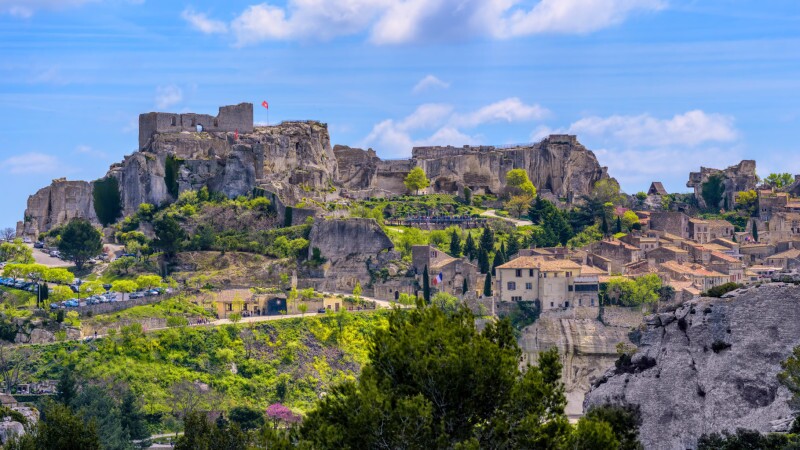
Provence is known for its villages perché, dangling from vertiginous hillsides, their very impregnability now the chief draw for the invading hordes of tourists. Invading hordes? Even the most touristy of the villages I visited - the salmon-pink, festive Roussillon and the more grown-up Gordes crowned by its imposing chateau - had few invaders while I was there.

Tourism is not all that Provence depends upon - and that is what keeps it unspoilt. Agriculture is the mainstay inland, away from the glitzy Côte d'Azur. St Didier is the cherry capital of France. Pernes les Fontaines has the best grapes. Cavaillon is home to the Charentais melon (when the town library asked Alexander Dumas for a set of his works he complied on one condition - that they send him an annual consignment of 12 melons). Strawberries, almonds, apples, pears - Provence is France's fruit basket. It is also uncommonly pristine. Everything is in its place, ordered and calm. The vines are clipped, the cherry trees in their lines, the roads swept. No litter and, more remarkably, no fat people.

And the walking? I tramped from picturesque village to picturesque village, up hills, across fields, under trees, sometimes detouring way up on to the Vaucluse plateau, finding my way through the low scrub. Once, near the Falaises de Madeleine - a dramatic limestone cliff 200ft high - I was charged by a dog but I maintained my stride with an air of indifference, and with just a small tweak of my left buttock, I managed to avoid a nasty nip.

And one morning I happened upon a strange phenomenon - a column of caterpillars, nose to tail, 16ft long, crossing a track high on the plateau. I thought at first it was a snake. There were 162 caterpillars in all but I cannot say where they were going or where they had come from.

It was the biggest crowd I came across in five days. At the 40-room Hotel Les Trois Colombes, the only two other guests were ladies of a certain age whose eyes I signally failed to catch over dinner. Later, as I was drifting off to sleep, I heard little moans and shrieks of pleasure from their room, three doors down from mine. Ah, I thought, what better way to remember Provence. Go now - and have it to yourself.


More about this holiday...

Introduction
Holiday summary
Day by day itinerary
Your accommodation
Photo gallery
Your travel options
Departure dates and prices
Map of the region

From our previous customers...

Customer comments
Press rewiews

Other holiday choices...

About Provence
Walking holidays in Provence
Cycling holidays in Provence

Find out more...

How our walking holidays work
Information desk and forum
Request our brochures
Contact our sales team

www.headwater.com | info@headwater.com |