Adjust filters if required
Holiday type
Self-guided cycling, Guided group cycling
Destination
All
Departure month
All
Find a holiday
Since 1985 Headwater have been offering award-winning cycling holidays and tours. Our customers tell us it is our carefully researched cycling routes designed by experienced cyclists, effortless luggage transfers, use of our own pioneering cycling navigation app, hand-picked locally owned accommodation, and UK-based team of specialists that sets us apart.
We offer a wide range of self-guided cycling holidays, from leisurely scenic cycle rides to more challenging cycle routes, including e-bike cycling holidays and tandem cycling holidays. Our cycling holidays span Europe, including Italy, Slovenia, France, Portugal, and Austria, as well as long-haul cycling holidays in the USA.

Independent Service Rating based on 154 verified reviews.
Our customers say:
Excellent support, personal approach
great routes and appRead all trip reviews
Explore some of the best cycling holiday destinations in Europe and the world, hand-picked by our UK-based cycling experts for their scenery, culture and variety of cycling routes. These destinations represent some of the most sought‑after cycling regions in Europe, chosen for scenery, route quality and cultural interest.
Our most popular cycling holiday destinations include Italy, Slovenia, France and Spain, each offering outstanding scenery and well-maintained cycle paths and routes. Italy, it feels, is everyone's favourite destination with cycling holidays available in Puglia, Piedmont, Dolomites, Italian Lakes, Sicily and of course Tuscany and Umbria. Slovenia is incredibly popular for cyclists offering both the Julian Alps from Lake Bled as well as the Adriatic Coast. France offers a wealth of cycling from the Chateaux strewn Loire and Dordogne to the UNESCO Canal du Midi, the Atlantic Coast and beaches of Normandy, not forgetting the lavender fields of Provence or the vineyards of the Champagne, Burgendy and Bordeaux. Spain offers both mainland routes through the well know Catalonia, Valencia and Andalucia and the off-the-beaten track Extremadura, as well as the popular Balearic island of Mallorca.
Many of these trips are ideal for first-time cycling holidays as well as experienced cyclists. Each offering outstanding scenery and well-maintained cycle paths, making them some of the best cycling holiday regions in Europe.
In most cases our trusted local partners will meet you and fit you out with bikes sized to suit you based on the heights you provide when you make the booking. Each one is supplied with a puncture repair kit alongside a few handy extras.
Depending on the trip they will also give you a briefing and be on hand to answer any questions you have. They will go through the route directions - firstly to point out any last-minute alterations and also to provide additional advice on things to do and places to visit. Where a local brief is not necessary, all the same detailed information can be found in your app or documentation.
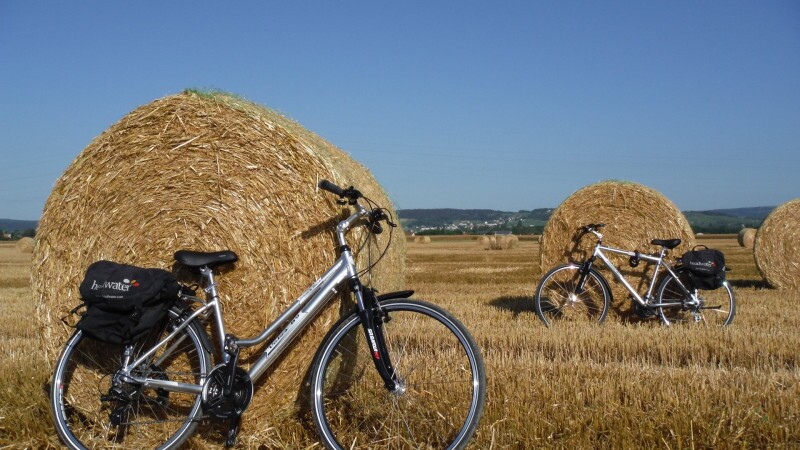
The bikes on our self-guided cycling holidays are provided by our carefully selected local agent partners and as such the exact make and model of the bikes will vary by destination. However, each has been selected by our UK-Based cycling expert Product Manager in order to provide you with the best option for the terrain and activity level of the chosen holiday. All of our bikes come equipped with a puncture repair kit in case you're unlucky enough to get a flat and fitted with panniers for your picnic and sun cream.
To help you choose the right trip, all our cycling holidays are graded by difficulty, based on distance, ascent and terrain, using our in-house activity grading system developed from decades of experience
When searching for your ideal cycling holiday, look out for the activity level in the search panel and on each individual holiday page. Each cycling holiday is marked with a rating from 1 to 4 using the Headwater activity grading system. Alternatively, you can choose your required activity level when searching for your next cycling holiday on our website. For some of our cycling holidays, there will be a choice of route with two difficulty ratings. Depending on how you're feeling that day, you'll be free to choose between the routes at your leisure.
To learn more about our activity grading please click here
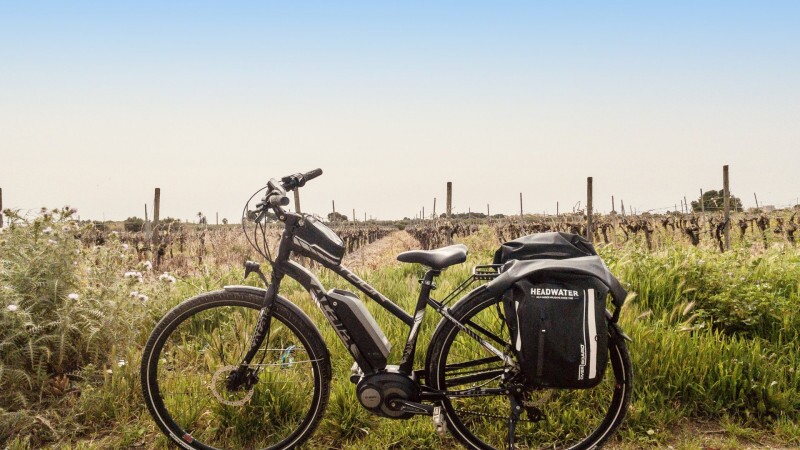
We now offer some dedicated e-bike holidays as well as being an option on many of our self-guided cycling holidays.
Electric bikes provide all the benefits of a normal bike: you can enjoy gentle exercise, fresh open air, interaction with nature, and the chance to meet other cyclists. The difference is that you won't need any prior endurance cycling experience - and they have the bonus of making light work of the occasional uphill section! E-bikes are the perfect solution for those who'd like to share holiday experiences but don't necessarily share the same levels of fitness. To learn about our e-bike holidays please click here
When you book one of our self-guided cycling holidays moving from hotel to hotel, our experienced team will discuss with you the activity level, elevations and distances to ensure it is an enjoyable holiday and you can take in the scenic routes on offer and relax on the rest days in between
Where you are staying in a single hotel there's no pressure to go far. We'll provide you with routes to help you find the best spots - but there's no commitment to ride if you don't want to. Many of our guests only do a few miles each day, while others head out for longer adventures.
Trusted by riders for over 40 years, Headwater has been creating award-winning self-guided cycling holidays since 1985.
Our holidays are designed by experienced cyclists and destination specialists, and reviewed continuously using verified customer feedback. We are ABTA and ATOL bonded, a certified B Corp, and proud recipients of the Feefo Platinum Trusted Service Award. And finally, we love what we do and love hearing your amazing feedback, which is why we now offer over 300 trips to 45 countries.
No, you will not have to carry your bags. Our hotel-to-hotel cycling holidays with luggage transfer mean you only carry a light day pack or side pannier. You simply leave your clearly labelled luggage in reception in the morning, and hey presto, it will be waiting for you at your next hotel. You will only need to carry the bare minimum for the days ride, leaving you free to enjoy the journey. Your holiday made simple by Headwater.
When planning what to wear on each day of your cycling holiday, consider the weather and the distance and the terrain of your chosen route. But no matter what, don't forget your padded cycling shorts as you'll be spending a lot of time in the saddle! We strongly recommend you do some test rides with your kit and do not use a cycling holiday to break in your new stuff!
If it's raining, you'll need a waterproof jacket that can be folded away for when the sun comes out. Or, if it's a hot, sunny day, wear lightweight clothing to keep you at a suitable temperature. A sun hat is also essential for when you stop.
We strongly recommended the wearing of a helmet for all cycling activities and not wearing a helmet may affect the validity of your insurance. In fact, in several countries cycling helmets are a legal requirement and where this is the case it is mentioned on each trip page
Don't worry about bringing a large rucksack with you, as you should only require a small day pack or use of a provided pannier. If you've chosen one of our hotel-to-hotel cycling holidays, we will transport all your luggage for you, so you're not having to carry it around. All you'll need to carry on your ride is what you will need during the day, including your navigation and any food and drink.
No. You are expected to bring your own helmet as we do not facilitate the hiring of helmets. We recognise this may be an inconvenience to some, however, the reason for not hiring helmets is that no one can guarantee their integrity from one hire to the next until they are put to the ultimate test - We will not compromise on your safety.
Many of our local partners may be able to supply helmets, however hiring or purchasing a helmet at your destination is at the customer's own discretion. If you decide to hire or purchase a helmet at your destination Headwater cannot be held responsible for the suitability, condition, or any issues or problems with helmets or other protective headwear, nor can we guarantee the availability.
If you choose to ignore our advice to wear a helmet or other protective headwear you understand that you do so at your own risk and that such action may affect the validity of your travel insurance. Cycling of all kinds has its dangers and accidents can happen from time to time.
Note that if you do not have a helmet in countries where it is mandatory, you will not be allowed to take part in any cycling element, which may mean that you are not able to continue with the tour and Headwater will not be responsible for any costs you incur as a result.
It is really easy to navigate Headwater's self-guided cycling holidays. We give you all the information you need and our state-of-the-art, easy to use navigation app ensures you will never get lost.
Many of our self-guided cycling holidays offer the Headwater Navigation App. It's an easy-to-use GPS App that provides turn-by-turn route directions with audio cues when cycling. Even if you have no map-reading experience or struggle to follow directions, we assure you our App will make it very easy. And don't worry, it doesn't use mobile roaming data.
Thanks to the audio cues you will have less need to stop and start whilst pedalling; you are left with more freedom to soak up your surroundings and enjoy the ride. We've also included 'points of interest' along the routes to highlight the amazing scenery, fascinating architecture and quaint little villages that make Headwater cycling holidays so special.
To learn more about our Navigation App click here
Yes. If you've booked a hotel-to-hotel holiday, your route will take you from one hotel to the next. Our detailed you simple to use route navigation (all included in the price) will ensure you don't end up lost, whilst still giving you the opportunity for additional exploring. Any rest days will be detailed in the itinerary. If you are on a single centre cycling holiday then the choice is yours. We will provide you with lots of cycling options and you can choose which one you want to ride or simply enjoy a well-deserved rest day. On our self-guided holidays, we provide cycling suggestions - then it's up to you how often you ride, and where you explore.
All Headwater cycling routes are researched by our in-house cycling experts, in collaboration with the local destination specialists and local authorities ensuring safe, scenic and culturally rich rides. Our routes are carefully selected to give you a real insight into your chosen destination, whether it's quaint villages, spectacular panoramas, or must-see hotspots.
All this information is included in your pre-holiday documents and held in our navigation app keeping you well informed on your ride - it is like having a guide in your pocket.
What's challenging for one person can be leisurely for someone else, but while it's not possible to be precise about how easy or difficult an activity will be, our activity ratings can offer a practical guide as to what to expect. When assigning an activity level to a holiday, we consider factors such as gradient and length of ride, as well as the terrain, route conditions, and location.
All our holidays are graded from 1-4 so you can choose one that best suits your abilities:
Level 1 - Leisurely. Suitable for anyone who is reasonably fit and healthy, enjoys the occasional weekend ride. Gentle routes, often flat but with the occasional short climb. On average expect to be cycling for 20-60km each day depending on the elevation and terrain. A great choice for first-timers, families and those wanting a relaxed active break.
Level 2 - Moderate. For anyone looking for longer rides, expect more undulations on these trips. The more varied terrain will appeal to a more active rider. You can expect to be climbing up to 660m in a day, over a distance of 20-90km. No special technical skills ae required but you must be good health and reasonably fit.
Level 3 - Demanding. Fitness is important as you can expect full day rides. We recommend you be a regular, confident cyclist to enjoy this level. Cycling tends to be on longer ore challenging routes up to 100km. Routes will also be hilly, some with longer climbs. Expect elevations between 400-800m. Riders are required to have a good level of physical fitness.
Level 4 - Challenging. Being full day rides, our Challenging trips require strong fitness and cycling confidence. Expect longer distances, steeper climbs and descents - ideal for experienced riders. Routes may reach up to 120km with 1000m elevation gain in a day. E-bikes are generally not suitable for Level 4 holidays.
+ Trips - Plus trips have small sections of the route that are more challenging than the overall grading.
Dual Levels - Dual levels signify a choice of routes at either level. You can choose which level route to ride on a daily basis.
To learn more about our activity grading please click here
You should always pack appropriately for your destination, whether that means lots of warm layers, or some suncream and a helmet. It is also essential that you have comfortable cycling shorts. Otherwise it is about wearing what is comfortable, breathable and appropriate for the weather.
On most trips we are able to facilitate the swapping of standard pedals for your own pedals. However, we need to know in advance to check with our local suppliers and ensure they are prepared for your arrival with the correct pedal spanner. The same advance notice is required for cycle computers, saddles and child seats.
Yes. If you are an active family who enjoys the outdoors and are confident cycling the distances and terrain on the trip, then a cycling holiday is a great option for a family and the perfect distraction from screen time! We have put together a list of trips we would recommend for younger families thanks to their shorter distances, quieter routes, less elevation and access to children's bikes; if you are interested, please just ask one of our friendly and knowledgeable sales consultants for advice.
To view our short-list of family friendly self-guided cycling holidays click here
Yes - many of our trips are ideal for solo cycling holidays, with clear guidance on suitability and support. However, there are a few trips we deem unsuitable, for example where the routes take you to more remote locations.
To view our short-list of recommended cycling trips for solo's click here
Good question. Group guided holidays are where a local guide is with you throughout your holiday and leads the rides, tailoring them to the groups capabilities. The positives are that you do not have to navigate and there is support immediately on hand, however, you are behest to the group and the guide will tailor the routes to suit everyone meaning there maybe some compromises. Alternatively, self-guided is where you ride independently in your holiday party. You choose the start time, you set the pace, you decide when to pause and drink in that view (or glass of wine, why not both!). You are in charge, and you are armed with simple, clear navigation which is easy to use even if it is your first time on a cycling holiday. The navigation also comes with lots of local points of interest, so it is like having a guide in your pocket, meaning you will not miss out on those local insights. We recommend having the cues on audio setting so that they can tell you about an approaching junction meaning you never miss a pedal turn.
Lots of people love the idea of a cycling holiday in some incredible destinations like the Italy's Puglia or Italian Lakes or Slovenia's Julian Alps, but do not know how the holiday will work in practice. Plus, the term self-guided can be confusing if you have not done this type of holiday before. Let's see if we can help clear things up...
To be self-guided, means that you do the navigation. But don't worry, we're here to help every step of the way. Our easy to follow navigation means that you will not get lost, even if it is your first time on this type of holiday. Rest assured, you don't need to read OS maps or use a compass to navigate. The majority of the time the route is on our Headwater App which gently talks to you at each junction, explaining the next turn and even points out places of interest along the way. Being self-guided also means that there is no group and no guide, so you can ride at your own pace and pause whenever you want - this is your holiday, so why follow the crowd?
We offer a range of hotel-to-hotel, twin centre or single centre holiday's. You can filter by Accommodation type on our website, so let's take each one in turn:
A hotel-to-hotel cycling holiday, means that in the morning you leave from one hotel and your ultimate destination that day is your next hotel You will be cycling in your own group and setting your own pace, expertly guided by our simple to use navigation. Meanwhile, the luggage you left clearly labelled at your hotel that morning is magically collected and whisked to your next hotel. This means you only carry what you need for that day. Cycling hotel-to-hotel allows you to explore more of a destination as you are covering more distance, whilst allowing you to stop in authentic, off-the beaten track locations along the way.
A twin centre cycling holiday means less unpacking as your holiday is between only two hotels. The first half of your holiday can enjoy a range of rides centred around your first location. Then on the change-over day, either by riding, public transport or private transfer, you will head to your new hotel and from here you can enjoy a new collection of routes in this new location.
A single centre cycling holiday is where you are based at the one hotel for the full duration of your holiday. You can unpack, relax and really get to know the area through a collection of routes that you can choose from at your leisure. And if you fancy a day off from cycling, no problems, it is a holiday after all. Often our single centres have a lot more rides than days and at differing activity levels, so you will be spoilt for choice.
Yes, absolutely. In addition to being provided with all the local emergency numbers, on a self-guided cycling holiday you are provided with an emergency telephone number which is available 24/7, meaning support is just a phone call away. That said, a puncture is not an emergency and you are expected to be able to change an inner tube should you get a flat.
This can vary depending on the trip, but we make it clear on each individual trip page with a transparent 'What's Included' section.
Beauty is in the eye of the beholder? But simply put, this is your holiday and we are passionate about you enjoying it and we know the accommodation is really important to you and therefore we go to great lengths to pick just the right ones who are also happy to accommodate your bikes. However, in some remote locations choices may be limited, and so we may have had to rate hospitality above facilities.
On the individual trip webpage expand the day's itinerary to find out more about your accommodation. If the holiday is a single centre the hotel information will be shown only in Day 1. We clearly mark each accommodation with our own star rating for guidance purposes.
All our accommodation has been inspected and classified by the authorities of the relevant countries. As there is no direct British equivalent of many classifications, the broad expression 'hotels' refers to all the different types of accommodation we use, from friendly family-run B&B and country inns to luxury ***** hotels (where * is the country's official hotel rating).
Headwater's accommodation star ratings are provided to give you guidance on the relative standard of the accommodation you will be staying in. In most occasions this will match the official star rating of the accommodation, however, if we feel it necessary Headwater will adapt a rating to what we believe is fair. This is based on a variety of checks which can include property visits, customer feedback, facilities and location, or if the accommodation does not hold an official rating of its own. These ratings are reviewed regularly to ensure their accuracy and relevance for guidance purposes.
Yes, absolutely. Adequate and valid travel insurance for your chosen itinerary is compulsory for all travellers and it is a condition of accepting your booking that you agree you will have obtained adequate and valid travel insurance. We recommend you take out insurance as soon as your booking is confirmed. You are strongly advised to insure yourself against any possible risk that may occur and in particular to ensure that you have sufficient insurance in respect of dependent relatives and force majeure events. You are required to carry proof of insurance with you during your holiday.
We can easily arrange extra nights at the start or end of your holiday, and often highly recommend it so you get to enjoy more of the destination you have reached. As for customising the route itself, it depends. It is your holiday and we want it to be perfect for you, so where we can help we will. Just ask and we will be happy to advise you.
Yes, in the main we can arrange the holiday with your own bike. We just need to know when you are enquiring that this is something you would like to do so we can ensure our local agents are prepared for your arrival.
Yes, absolutely. We can book your flights as part of a fully protected package as we're both ABTA and ATOL bonded.
Yes we can. Whether you want to take the low carbon and relaxed Eurostar to Europe, or take a train transfer from the airport to your destination, we can easily book the rail tickets for you as part of your holiday. As an added bonus, it means you will also benefit from the protection of the Package Travel and Linked Travel Arrangement Regulations 2018.
Safety is central to every Headwater cycling holiday, with professionally researched routes, clear grading and 24/7 local and UK-based emergency support. As a fully ABTA and ATOL bonded cycling holiday provider, your booking and travel are financially protected. All our routes are graded according to their activity level so you can find the one that best suits your ability. We also advise if they are suitable for people travelling solo. To go on a Headwater holiday you must have appropriate travel insurance, and as this is an active holiday, there is an element of self-awareness and self-care required.
Yes. Headwater is both ABTA and ATOL bonded, meaning you're choosing a trusted, regulated travel company that protects your money and looks after you from booking to return, so you can book and travel in complete confidence.